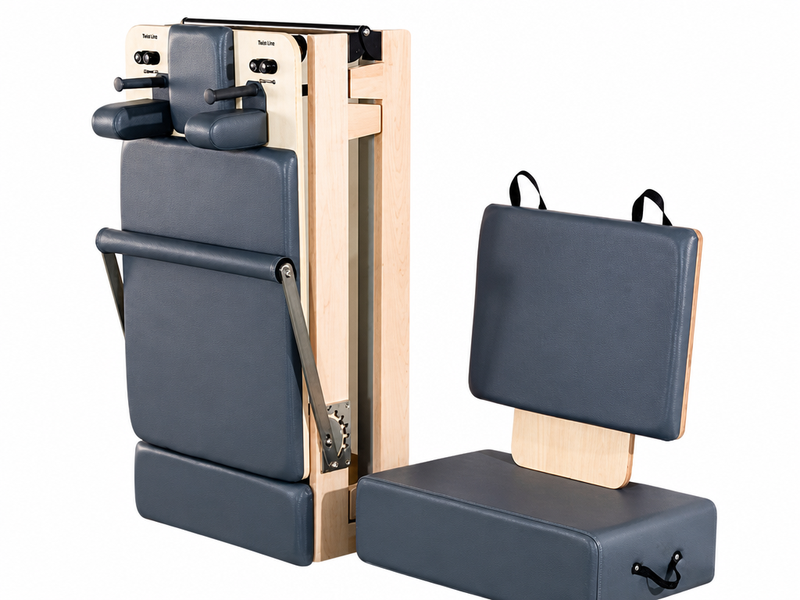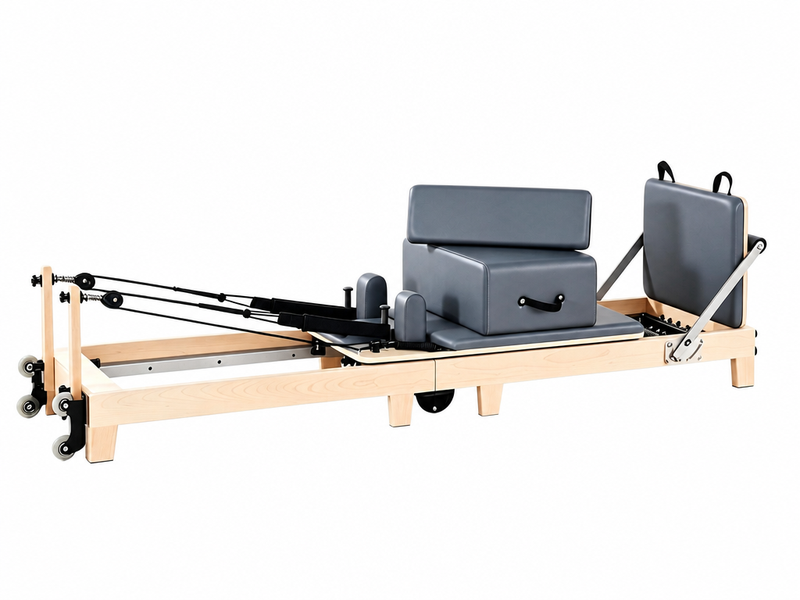
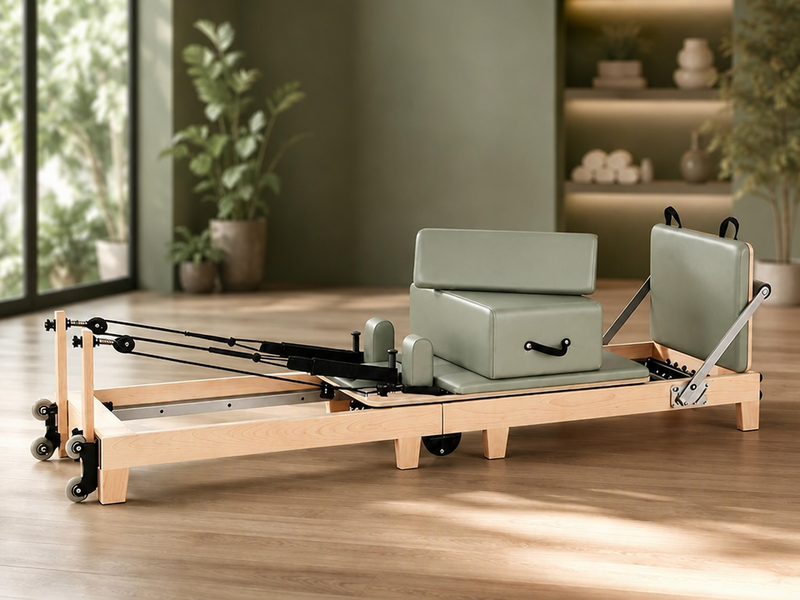
Floor space is the most expensive thing in any studio, and it is the reason folding reformers stopped being a compromise and became a category of their own. FITMAX builds four folding models across its wood and metal lines, each with a different trade-off between folded size and open performance.
The Y-type folding core bed measures 2547 × 677 × 266 mm open and folds down to 1350 × 740 × 485 mm — short enough to stand against a wall or slide into a storage closet. The standard folding bed is 2550 × 660 × 630 mm open and folds to 1200 × 650 × 370 mm. The half-track folding model opens to a full 2357 × 876 × 257 mm track and folds to 1300 × 900 × 500 mm. On the metal side, the folding bed is 2340 × 620 × 270 mm open, 100 kg net weight, with the option of custom frame colors.
The honest trade-off: when open, a folding model uses the same rail length as a fixed reformer — that is the point — but the frame design is different, so it is worth testing the glide before buying if stability under heavy use is your main concern. FITMAX's own product materials claim folding models can save up to 65% of floor space ⚠️ verify this figure against the actual model you plan to buy.
Who should consider folding? Mobile trainers who carry equipment between locations. Studios in 80–100 m² rooms that want five machines in a space that fits three. Home studios where the reformer shares a room with real life. For those buyers, a folding model is not a downgrade — it is the machine that makes the business work.
Mixed orders are welcome: folding units for the annex, fixed reformers for the main floor. Ask the sales team which folding reformer matches your room size and teaching schedule.